Goth Garden: Create a Spooky and Mysterious Outdoor Oasis
If you’ve ever been captivated by the allure of Gothic architecture, dramatic color palettes, or the picturesque mystique of a haunted secret garden, you’re going to love the concept of a Goth garden. In a world where modern minimalism often reigns supreme, there’s a growing trend towards creating spooky yet enchanting outdoor spaces that evoke wonder and introspection. In this article, we’ll explore how to design an unforgettable Goth garden a mysterious outdoor oasis filled with dark foliage, vibrant blooms, and intriguing decor.
We’ll delve into the essential components that make up a Goth garden, offer practical tips for crafting your outdoor oasis, and provide a treasure trove of inspiring ideas that will turn your backyard into a magical escape. Whether you’re a seasoned gardening enthusiast or just looking to add a unique twist to your landscape, we aim to equip you with the knowledge and inspiration you need to bring your vision to life.
Table of Contents
Why a Goth Garden Is Trending in Modern Homes
The appeal of a Goth garden lies in its ability to blend beauty with the mysterious. While most gardens focus on the light and airy, a Gothic-inspired garden invites you to explore beauty in darkness. Recent shifts towards natural living and customized outdoor spaces have encouraged many to embrace the moody elegance of the Goth aesthetic.
Captivating Elements of a Goth Garden
- Dark Plants: Opt for plants with deep, rich hues. Black calla lilies and dark-leaved heucheras add drama.
- Vibrant Contrasts: Pair dark foliage with bright, jewel-toned flowers. Think violet, crimson, and emerald greens.
- Architectural Features: Incorporate dramatic structures, such as trellises and arches, that evoke a sense of history.
Creating a Goth garden captures the essence of nature while allowing for unique expressions of self and artistic tastes.
How to Design a Beautiful Goth Garden
Designing a Goth garden can be an exciting and fulfilling project. Here are several essential steps to consider:
1. Choose the Right Location
Assess your outdoor space. Aspects like light, wind, and soil quality play vital roles in plant choice. Determine whether your space gets full sun, partial shade, or is primarily shaded.
2. Select Suitable Plants
Incorporating a mix of evergreen and seasonal plants is key for vamping up the aesthetic. Here are some great choices:
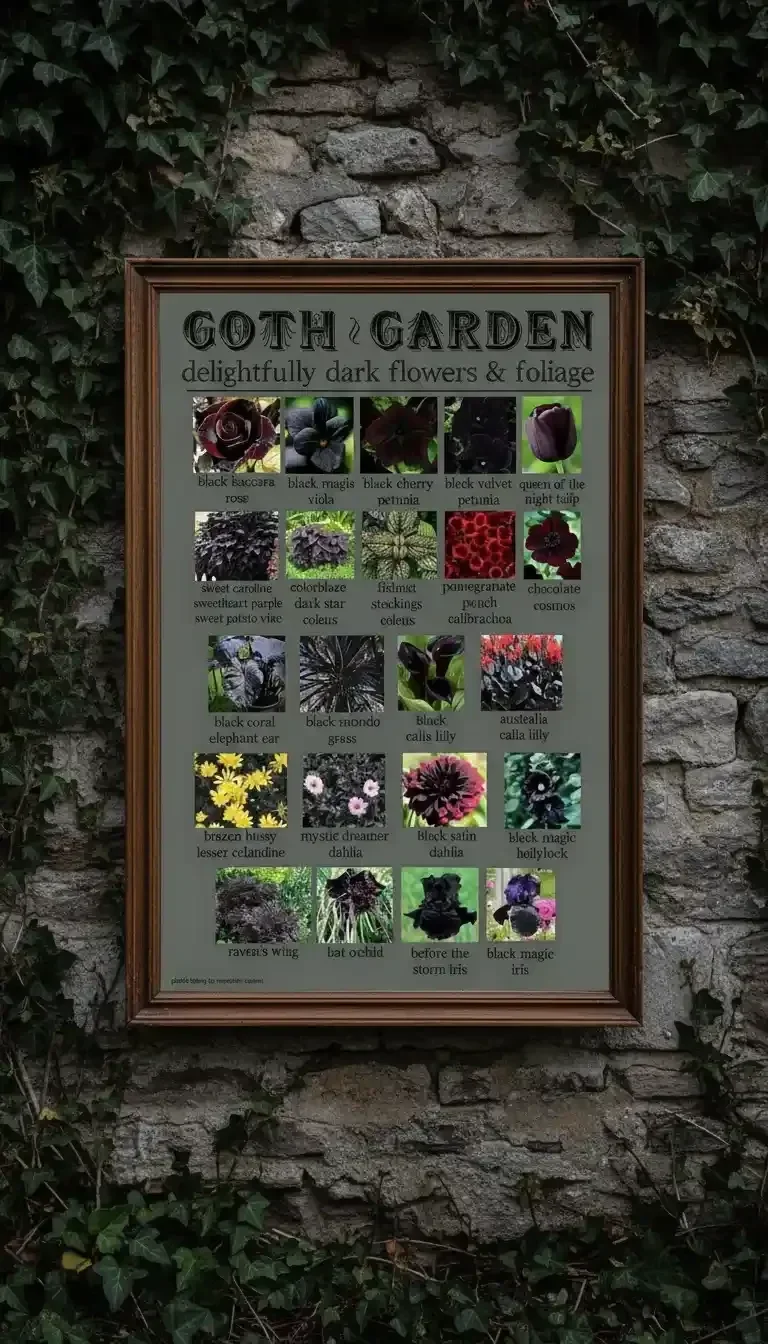
- Foliage: Use black or very dark-leaved plants like Ophiopogon planiscapus (black mondo grass) or Heuchera (coral bells) for vivid contrast.
- Flowers: Opt for dark blooms such as black hollyhocks and deep purple asters.
- Roses: Include dark-hued roses, like ‘Black Baccara’ or ‘Midnight Blue’, for a classic touch.
3. Incorporate Gothic Decor
Adding decorative elements is where your Goth garden truly comes alive. Here’s what you can do:
- Statues: Add striking figurines or gargoyles to evoke an air of mystery.
- Pathways and Lighting: Use antique lanterns and pathway stones for an eerie glow at night.
- Textiles: Introduce dark fabrics in your seating areas, like velvets and silks, for comfort.
Best Color Palettes for Goth Gardens
The color palette is crucial in establishing the mood of your Goth garden. Stick to darker hues with pops of brightness. Some popular combinations include:
- Black and Violet: Deep shadows accented by rich purples create a dramatic backdrop.
- Charcoal and Blood Red: A striking contrast that emphasizes passion and intensity.
- Emerald Green and Midnight Blue: A sophisticated choice that marries earth tones with dark mystery.
Creating Layers Through Color
- Use plants in varying heights for depth.
- Combine foliage with dark blooms to achieve a visually stimulating scene.
- Incorporate ornamental grasses that sway gently, adding movement to your garden.
Decorating Tips for Small Spaces
Transforming a smaller outdoor space into a Goth garden presents its challenges, but it can also yield remarkable results. Here are a few tips:
- Vertical Gardens: Utilize wall space with hanging planters or trellises to maximize gardening area.
- Mirrors: Create the illusion of a larger space by incorporating mirrors strategically into your design.
- Cozy Nooks: Design small seating areas with dark cushions and candles for an intimate escape.
Common Mistakes to Avoid
While designing your Goth garden, it’s essential to avoid the following pitfalls:
- Overcrowding Plants: Ensure your plants have enough room to grow. Too many can become chaotic rather than beautifully eerie.
- Ignoring Maintenance Needs: Select plants that fit your lifestyle; low-maintenance options will allow you to focus on aesthetics without excessive upkeep.
- Lack of Planning: Sketch out your design before planting to avoid costly mistakes and ensure a cohesive look.
20 Ideas for Goth Gardens
1. Dark Floral Beds
Create beds brimming with deep red and black flowers. Consider peonies, dahlias, and ornamental cabbages.
2. Gothic Statues
Incorporate statues of ravens or other mystical creatures as focal points.
3. Creepy Pathways
Line pathways with black stones or slate tiles that enhance the garden’s spooky atmosphere.
4. Cozy Fire Pit
Install a fire pit surrounded by dark-stained furniture and soft throws for nighttime gatherings.
5. Candelabra Lanterns
Adorn your garden with ornate lanterns that provide a flickering light, creating a magical ambiance.
6. Natural Fencing
Use dark, twisted branches or wrought iron to define your space while maintaining a ghostly intrigue.
7. Mourning Mirrors
Place antique-style mirrors in strategic spots to reflect the beauty around you, adding an air of enchantment.
8. Witchy Herb Mix
Grow dark, aromatic herbs like purple basil and lavender, which also bring a witchy flair to your garden.
9. Stone Benches
Incorporate a rustic stone bench for a classic Gothic touch and a perfect resting spot.
10. Moonlit Gathering Space
Create an outdoor area with dark fabrics and pillows for moonlight gatherings, perfect for spooky storytelling.
11. Murky Water Feature
Add a pond or water feature, and plant dark water lilies to evoke mystery.
12. Occasional Sculptures
Position playful sculptures among your plants to evoke curiosity and inspire storytelling.
13. Layered Heights
Vary plant heights with tall dark blooms and shorter ground cover to create layers.
14. Velvet Cushions
Introduce plush, dark cushions on outdoor seating for comfort and a luxe touch.
15. Gothic Arbors
Install an arbor covered in dark vines to create an enchanting entrance to your garden.
16. Black Fountain
Incorporate a black stone fountain that adds both sound and aesthetic.
17. Night-Blooming Plants
Include evening bloomers like moonflowers to invite nighttime magic.
18. Trellis Hacks
Use antique-style trellises coated in dark paint as protection for climbing plants that soften structure edges.
19. Whimsical Path Lighting
Use eclectic lanterns along paths for whimsical nighttime charm.
20. Seasonal Decor
Change the decor with each season, adding elements like skulls or pumpkins for autumn or white flowers for winter.
Expert Tips Section
Interior designers recommend considering the following when planning your Goth garden:
- Layering Textures: Combining a mix of different materials creates depth. Use stone, metal, wood, and textiles to add variety.
- Mixing Natural Materials: Balance the Gothic elements with natural wood and rough stones to maintain organic beauty.
- Utilizing Plants for Balance: Use strategically placed plants to create focal points while drawing the eye through your garden.
Frequently Asked Questions
H3: What colors go best with a Goth garden?
Opt for deep hues like black, violet, emerald green, and blood red to create a stunning contrast.
H3: How can I add gothic decor to my outdoor space?
Incorporate statues, old lanterns, and dark textiles to achieve a spooky yet inviting atmosphere.
H3: What plants thrive in a dark-themed garden?
Look for dark-leafed plants like black mondo grass, dark roses, and purple foliage for visual impact.
H3: Can I create a Goth garden in a small yard?
Absolutely! Use vertical gardening techniques and cozy seating arrangements to maximize your space.
H3: How do I maintain a Goth garden?
Choose low-maintenance plants, and regularly prune and deadhead to keep your garden healthy while preserving its allure.
Suggestions for External Links
Creating a Goth garden is an unforgettable journey into the realms of creativity, nature, and personal expression. So grab your gardening gloves and start crafting your very own dark oasis!