Color palette for exterior house paint
Have you ever driven past a house that made you slow down just to admire its exterior? The secret to that head-turning curb appeal often lies in a thoughtfully selected color palette for exterior house paint. With the right combination of colors, your home can stand out beautifully in your neighborhood while reflecting your personal style.
Selecting appropriate exterior paint schemes is more than just an aesthetic choice it’s an investment that protects your home while increasing its value. Today’s homeowners are increasingly recognizing that exterior colors are just as important as interior design when it comes to creating a cohesive, welcoming home environment.
Table of Contents
Design Concept Overview
Exterior color design is fundamentally about creating harmony between your home’s architectural style, the surrounding landscape, and neighborhood context. A well-conceived exterior palette typically includes three to four coordinating colors: a primary color for walls, a secondary color for trim elements, an accent color for doors and shutters, and sometimes a fourth color for architectural details. The most successful home exteriors consider fixed elements like roofing, stonework, and landscaping when developing a cohesive scheme.
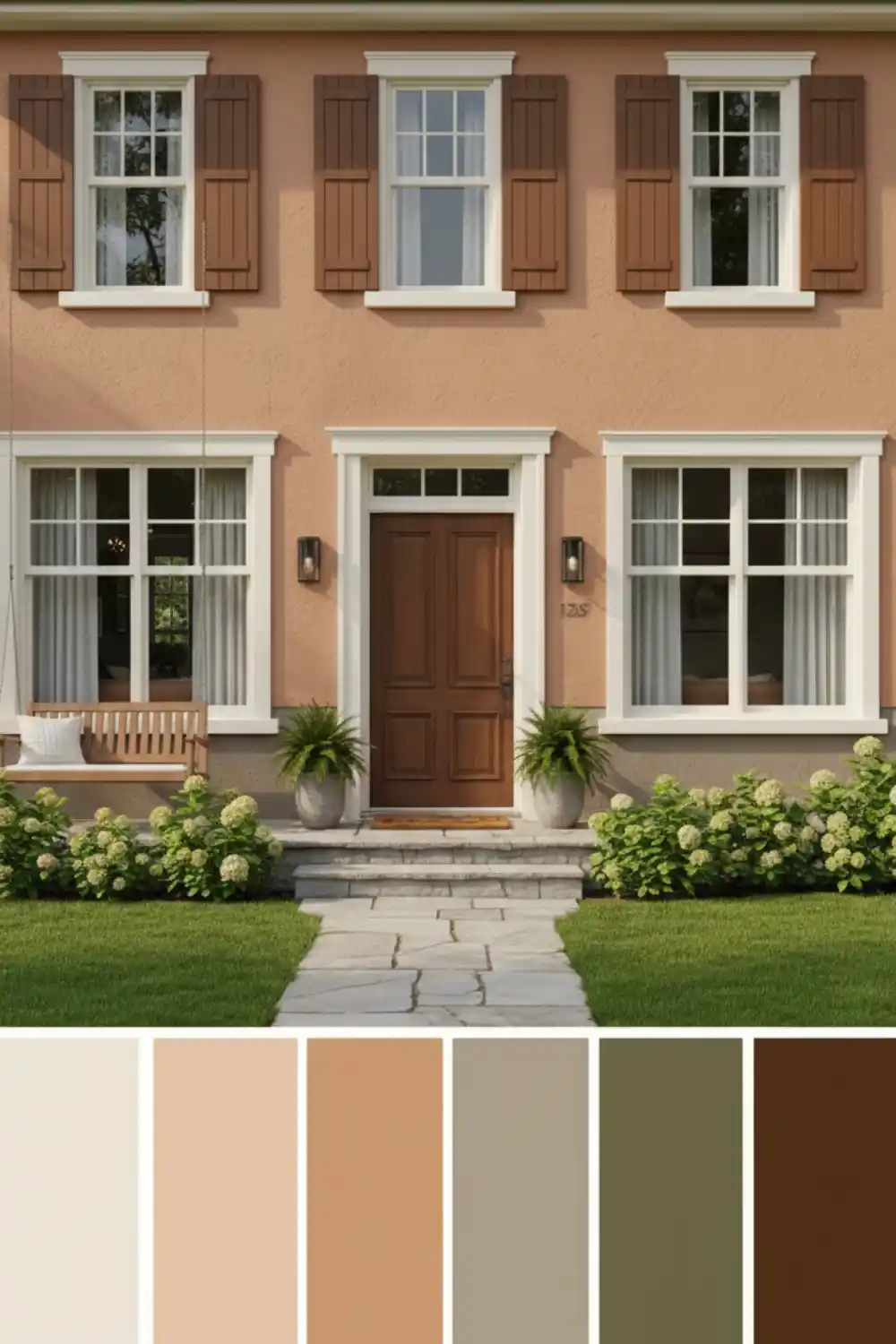
Modern exterior color trends lean toward earthy neutrals, soft greens, warm whites, charcoal blues, and subdued terracottas. However, the ideal palette should complement your home’s architectural style whether Victorian, Craftsman, Contemporary, Colonial, or Ranch each style has color traditions that can be honored or thoughtfully updated for a fresh look.
Materials, Colors & Key Elements
Foundation Colors
– Main Body Color: This covers the largest surface area and sets the tone for your entire palette. Consider weather-resistant options like Benjamin Moore’s Aura Exterior or Sherwin-Williams Emerald Exterior.
– Trim Color: Usually lighter than the main color, this defines windows, fascia boards, and architectural details. Semi-gloss finishes work best here for durability and visual definition.
– Accent Color: Use this for front doors, shutters, or other focal points this is where you can incorporate more saturated or contrasting hues.
Key Elements to Consider
1. Roof Color: Your roof represents a significant portion of visible exterior and should coordinate with your paint palette.
2. Fixed Materials: Consider brick, stone, or other permanent elements that can’t be changed.
3. Landscaping: Your garden colors and natural surroundings should complement your home’s exterior colors.
4. Neighborhood Context: While standing out is nice, extreme contrast with neighboring properties can sometimes appear jarring.
5. Light Exposure: South-facing homes get more direct sunlight, which can make colors appear warmer and brighter than on north-facing facades.
Timing, Budget & Planning
Exterior painting is a significant investment in both time and money. For a typical 2,500 square foot home, expect to budget between $3,000-$6,000 for professional painting, depending on your location, home’s condition, and paint quality. DIY approaches can reduce costs by 40-60% but require considerable time investment and skill.
Timing Considerations:
– Planning Phase: 2-4 weeks for color research, sampling, and decision-making
– Preparation Work: 3-7 days for cleaning, scraping, priming, and repairs
– Painting Process: 3-5 days for professional crews, 1-2 weeks for DIY
– Ideal Weather Conditions: 50-85°F with moderate humidity and no rain in forecast
Budget Breakdown:
– Premium Paint: $45-$80 per gallon (10-15 gallons for average home)
– Tools & Supplies: $200-$400 for brushes, rollers, drop cloths, tape, etc.
– Professional Labor: $25-$75 per hour depending on location
– Repairs & Prep: Varies widely based on home condition, potentially $500-$2,000
For budget-conscious homeowners, consider painting just the trim and front door while keeping the main color, which can refresh your home’s appearance for about 30% of the full project cost.
Step-by-Step Guide
1. Analyze Your Home’s Architecture
Begin by identifying your home’s architectural style and researching traditional or complementary color palette for exterior house paint options for that style. Consider architectural features you want to highlight or downplay.
2. Consider Fixed Elements
Take inventory of unchangeable elements like roofing, stonework, brick, and hardscaping. Your paint colors must coordinate with these permanent features.
3. Gather Inspiration
Create a collection of homes with exterior paint schemes you admire. Use online resources, drive through appealing neighborhoods, or consult with design professionals.
4. Test Sample Colors
Purchase sample pints of your potential colors and paint large swatches (at least 2’x2′) on different sides of your home. Observe how they look throughout the day as light changes.
5. Create a Complete Palette
Finalize your selections for:
– Main body color
– Trim color (usually lighter than the body)
– Accent color for doors and shutters
– Optional fourth color for architectural details
6. Prepare Surfaces Properly
Thoroughly clean all surfaces, repair damaged areas, scrape loose paint, sand rough areas, and prime bare spots or significant color changes.
7. Apply in the Correct Order
Start with the highest areas (peaks and upper stories), then work down. Paint trim after the main surfaces, and finish with doors and accents.
8. Document Your Choices
Keep detailed records of all paint colors, brands, and finishes for future touch-ups and reference.
Benefits & Functional Advantages
A thoughtfully chosen exterior color palette delivers benefits beyond mere aesthetics:
- 1. Increased Property Value: Studies show that homes with appealing exterior colors can sell for 5-10% more than comparable properties with dated or inappropriate color schemes.
- 2. Enhanced Durability: Quality exterior paint acts as a protective barrier against moisture, UV rays, and insects, potentially extending the life of your siding materials.
- 3. Improved Energy Efficiency: Lighter colors reflect heat, potentially reducing cooling costs by 5-10% in warmer climates.
- 4. Architectural Enhancement: Strategic color placement can emphasize your home’s best features while minimizing less attractive elements.
- 5. Psychological Benefits: Coming home to an exterior you love creates a sense of pride and daily satisfaction that can’t be underestimated.
- 6. Community Contribution: Well-maintained homes with attractive exteriors positively influence neighborhood appeal and property values throughout the area.
Alternative Styles & Customization Ideas
Different architectural styles lend themselves to distinct color approaches:
– Craftsman Homes: Embrace earth tones like olive greens, deep browns, and rusty reds with contrasting cream trim.
– Victorian Houses: Consider historical color schemes with 4-5 colors highlighting intricate details, or modernize with monochromatic palettes in unexpected hues.
– Modern/Contemporary: Try dramatic contrasts with charcoals and whites, or muted palettes with a single bold accent.
– Ranch Styles: Update with sophisticated neutral main colors paired with dramatic door colors like navy, emerald, or burgundy.
– Regional Adaptations: Coastal homes often suit soft blues and sandy beiges, while desert homes look stunning in terracottas and sage greens.
For smaller homes or budget updates, focus on high-impact changes like repainting just the front door and shutters in coordinating colors. This simple change can transform your home’s appearance for under $200.
Common Mistakes to Avoid
- 1. Ignoring Architectural Style
Don’t choose colors based solely on current trends without considering if they suit your home’s architectural character. - 2. Forgetting Fixed Elements
Many homeowners select paint colors without accounting for roof color, brick, or stonework, creating disjointed appearances. - 3. Inadequate Sampling
Viewing tiny color chips or testing paint only in small areas leads to disappointing results. Always test large swatches on multiple sides of your home. - 4. Using Too Many Colors
More than four different colors can create visual chaos rather than harmony. - 5. Poor Color Placement
Applying accent colors inconsistently or in too many locations dilutes their impact and creates a disorganized look. - 6. Neglecting Light Conditions
Colors appear dramatically different in bright sunlight versus shade. What looks perfect on south-facing walls might appear entirely different on north-facing surfaces. - 7. Improper Preparation
Skipping crucial prep steps like cleaning, scraping, and priming leads to premature paint failure regardless of color choice.
Maintenance & Longevity Tips
To maintain your home’s exterior color scheme:
- 1. Regular Cleaning: Pressure wash or hand-clean exterior surfaces annually to remove dirt, mold, and mildew that can degrade paint.
- 2. Prompt Repairs: Address any peeling, cracking, or damaged areas immediately to prevent moisture intrusion and more extensive damage.
- 3. Touch-Up Protocol: Keep leftover paint properly sealed for touch-ups, labeling each container with location information.
- 4. Maintenance Schedule: Expect to repaint trim every 5-7 years and main surfaces every 7-10 years, depending on your climate and paint quality.
- 5. Seasonal Inspections: Check your home’s exterior each spring and fall for any areas needing attention.
- 6. Color Refreshing: If your palette still works but looks faded, consider applying a fresh coat of the same colors rather than completely changing your scheme.
Conclusion
Selecting the perfect color palette for exterior house paint is a blend of art and science that balances personal preference with architectural integrity. By taking time to research options, test samples in various lighting conditions, and consider your home’s unique characteristics, you can create exterior paint schemes that enhance curb appeal and provide lasting satisfaction.
Remember that your home’s exterior is its face to the world investing thoughtfully in its color scheme pays dividends both emotionally and financially. Whether you’re planning a complete transformation or a subtle refresh, the right exterior colors can make your house feel truly like home while standing beautifully in its surroundings.
FAQs
How do I know if my chosen colors will look good together on my house exterior?
Test large samples (at least 2’x2′) of each color on different sides of your home. Observe them at different times of day for at least 48 hours before making final decisions. Digital visualization tools from major paint manufacturers can also help you preview combinations.
Should my exterior colors coordinate with my interior color scheme?
While complete matching isn’t necessary, having some connection between exterior and interior palettes creates a more cohesive feeling, especially around entry areas. Consider using a softer version of your exterior accent color in your entry hall for a subtle transition.
How many colors should I include in my exterior palette?
Most successful exterior schemes use three to four colors: a main body color, trim color, accent color, and sometimes a fourth color for architectural details. More than four colors can create visual confusion unless your home has very elaborate Victorian-style details.
Will darker exterior colors make my house look smaller?
Darker colors can make a house appear slightly smaller and more grounded, while lighter colors can make it seem larger and more prominent. For balance, consider using darker colors on the lower portions of the house and lighter colors above, which creates a visually pleasing, anchored appearance.
How can I ensure my exterior colors won’t fade quickly?
Choose high-quality paints specifically formulated for exteriors with built-in UV protection. Lighter colors generally fade less noticeably than darker ones, especially reds, deep blues, and purples. South and west-facing walls receive more intense sunlight and may fade faster, so consider slightly more fade-resistant formulations for these exposures.